Foundations form the critical interface between any structure and the ground beneath it, transferring loads safely while accommodating the unique subsurface conditions of the Tees Valley. In Middlesbrough, a comprehensive understanding of foundation engineering is not merely a design preference but a fundamental necessity. The category of Foundations encompasses the analysis, selection, design, and verification of the structural elements that support buildings, bridges, industrial plants, and infrastructure. Given the town's rich industrial heritage and ongoing regeneration, from the Middlehaven Docklands to new residential estates, the integrity of a project rests entirely on a geotechnically sound foundation strategy.
The local ground conditions in Middlesbrough are notoriously variable and challenging, a direct legacy of its post-glacial and industrial past. Much of the central and riverside areas are underlain by thick sequences of glacial till, laminated clays, sands, and gravels, often with pockets of soft alluvium and, critically, made ground from centuries of heavy industry. This anthropic layer can contain anything from blast furnace slag and demolition rubble to chemical by-products, posing risks of contamination, differential settlement, and unforeseen obstructions. A generic foundation solution is rarely viable here, making a bespoke assessment, starting with a rigorous bearing capacity analysis, the absolute cornerstone of any safe design.
All foundation design and construction in Middlesbrough must strictly adhere to the UK's robust regulatory framework, primarily the Eurocode suite, notably BS EN 1997 (Geotechnical design) and its UK National Annex. This is further governed by the Building Regulations 2010, specifically Approved Document A (Structure), and the requirements of the NHBC Standards for new residential developments. The Eurocode 7 mandate demands a transparent, limit-state design philosophy, classifying projects into Geotechnical Categories based on complexity. For the complex ground of central Middlesbrough, a Geotechnical Category 2 or even 3 is common, requiring a thorough ground investigation and detailed design justification, a process that fundamentally relies on accurate serviceability and ultimate limit state checks.
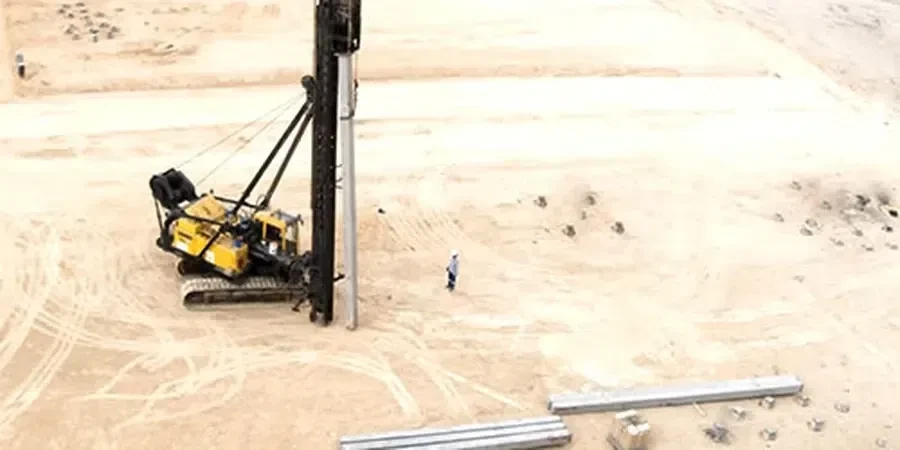
The types of projects requiring specialist foundation engineering in Middlesbrough are as diverse as its built environment. The rejuvenation of heavy industrial sites for commercial parks often necessitates deep foundations to bypass contaminated and compressible near-surface soils, where driven pile design offers a fast, robust, and proven solution for large-scale steel or concrete piling. Conversely, the tight access of urban infill projects or structural underpinning in the Victorian terraces of Linthorpe demands low-vibration, adaptable techniques, making micropile design an indispensable tool for navigating restricted headroom and complex site boundaries. From wind turbine bases on the Eston Hills to extensions on shrinkable clay soils, each project demands a nuanced approach rooted in local geological understanding.
Quick answers
Why is a site-specific ground investigation so critical for foundation design in Middlesbrough?
Middlesbrough's subsurface is highly variable, with extensive made ground from its industrial past, alongside natural deposits of glacial till, alluvium, and laminated clays. A generic design risks catastrophic differential settlement or encountering unforeseen obstructions and contamination. A bespoke ground investigation is mandatory under Eurocode 7 to properly characterise these risks and inform a safe, economical foundation strategy.
What is the difference between shallow and deep foundations, and when are deep foundations necessary?
Shallow foundations, like strip or pad footings, transfer loads to competent soil near the surface. Deep foundations, such as driven piles or micropiles, bypass weak, compressible, or contaminated near-surface layers to bear on stronger strata at depth. In Middlesbrough, deep foundations are frequently essential due to thick zones of made ground and soft alluvium common along the Tees corridor.
How do Eurocode 7 and the UK Building Regulations influence my foundation project?
Eurocode 7 (BS EN 1997) provides a limit-state design philosophy, requiring explicit checks for ultimate bearing capacity and serviceability settlement. The UK Building Regulations 2010, specifically Approved Document A, mandate that foundations safely transmit all loads without causing undue movement. Together, they demand a rigorous, justifiable design process based on site-specific geotechnical data, a legal requirement for all projects.
What are the key signs of foundation failure, and what should I do if I suspect an issue?
Key indicators include new or widening cracks in walls, sticking doors or windows, and visibly sloping floors. In Middlesbrough, this can stem from clay shrinkage, made ground consolidation, or washout. If you observe these signs, you must immediately commission a structural and geotechnical survey to diagnose the cause before undertaking any remedial work, which may involve underpinning with techniques like micropiling.