A new warehouse development near Middlesbrough Dock required precise bearing capacity data for a shallow foundation design. The client had soil reports from the 1990s, but those didn't account for recent filling and reclamation in the area. We mobilised a plate load test (PLT) directly on the stiff glacial till that underlies much of Middlesbrough. The test involved a 600 mm diameter steel plate, hydraulic jack, and reference beams. We loaded in stages up to 400 kPa, measuring settlement with dial gauges. The results gave a design bearing capacity of 250 kPa, which matched our estudio de SPT correlation from earlier boreholes. For Middlesbrough, where industrial land reuse is common, this direct measurement removes guesswork from foundation design.
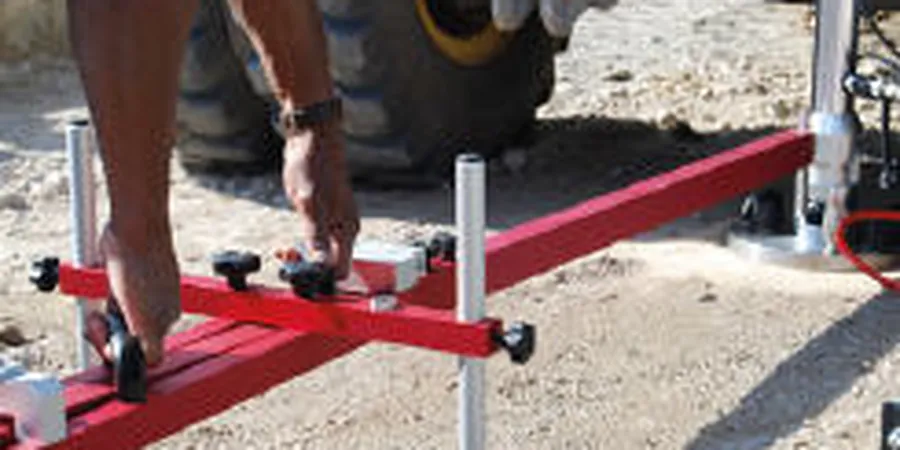
A plate load test in Middlesbrough can determine the in-situ bearing capacity of glacial till within a single day, removing reliance on empirical correlations alone.
Technical details of the service in Middlesbrough
Field demonstration
Critical ground factors in Middlesbrough
Middlesbrough sits on a mix of glacial till, alluvium, and made ground from its industrial past. The main risk is thinking the ground is uniform when it isn't. A single plate load test (PLT) at one location may not capture old foundations, buried solutions, or soft pockets left from clay extraction. The town's proximity to the River Tees means groundwater can be shallow, affecting bearing capacity in fine-grained soils. If a PLT is run during a dry summer but the foundation is built in a wet winter, the results could be misleading. We always recommend at least two tests per site — one for the worst-case zone and one for the typical area — and we cross-check with calicatas exploratorias to map lateral variability before setting the test locations.
Our services
Beyond standard plate load testing, we offer complementary field solutions for Middlesbrough ground conditions.
Reaction-Weighted PLT for High-Capacity Sites
For heavy industrial foundations in Middlesbrough, we use a kentledge reaction of up to 100 tonnes. This allows testing to 600 kPa or more on glacial till. We place concrete or steel blocks on a loading platform, jacking against them. The setup takes longer — about half a day — but gives reliable data for high-rise or warehouse racking foundations.
Rapid PLT for Pavement and Slab Design
For road subgrades or floor slabs in Middlesbrough, we run a simplified plate load test using a 300 mm plate and a portable hydraulic jack. This version uses a lighter reaction frame (lorry-mounted or screw anchors) and completes in 2–3 hours. It targets the modulus of subgrade reaction (k-value) rather than ultimate capacity, ideal for pavement engineers.
Q&A
What is the difference between a plate load test and an SPT for bearing capacity?
An SPT gives an indirect estimate of bearing capacity based on blow counts and empirical correlations. A plate load test (PLT) measures the actual load-settlement response of the ground at foundation level. In Middlesbrough, where made ground and glacial till vary laterally, PLT provides site-specific data that SPT correlations alone cannot match. We use SPT for profiling and PLT for design values.
How long does a plate load test take on a typical Middlesbrough site?
A standard PLT takes four to six hours on site, including plate placement, jack setup, loading cycles, and takedown. For a heavy reaction system (kentledge), allow an extra half-day for setup. The test itself runs continuously once started — each load stage holds for 15 minutes or until settlement stabilises. We usually complete one test per day.
What does a plate load test cost in Middlesbrough?
A standard plate load test in Middlesbrough ranges from £620 to £1,120, depending on the reaction system, plate size, and number of loading cycles. For sites with difficult access or requiring kentledge, the cost is at the higher end. We supply a fixed price quote after a quick site visit to assess access and ground conditions.
Can a plate load test be done on made ground or fill?
Yes, but with caution. Made ground in Middlesbrough — often brick rubble, slag, or clay fill — can give misleading results if the plate sits on a competent crust while deeper fill is loose. We recommend a trial pit or calicata exploratoria first to confirm the fill thickness and nature. The PLT then tests the fill itself or the natural ground below, depending on foundation depth.