Seismic engineering in Middlesbrough encompasses the assessment, design, and mitigation strategies required to safeguard structures against earthquake-induced ground motions and associated hazards. While the UK is not typically associated with high seismicity, the region experiences occasional tremors, and adherence to seismic codes is mandatory for certain project types. This category covers everything from site-specific hazard assessments to detailed structural analysis, ensuring that new developments and retrofits meet the resilience standards expected in modern construction. For local authorities, developers, and asset owners, engaging with seismic solutions is a proactive step towards risk reduction and long-term asset protection.
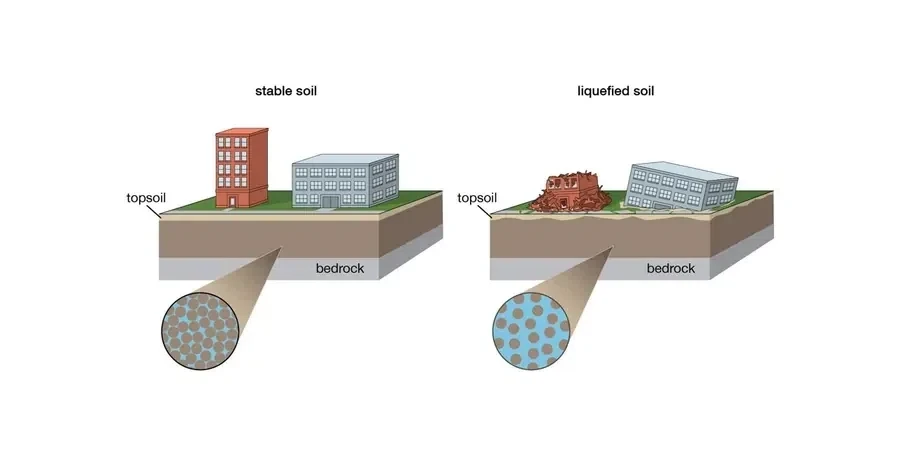
Understanding the local geological context is critical for any seismic evaluation in Middlesbrough. The town sits above layers of glacial till, sands, and gravels overlying the Mercia Mudstone Group, a Triassic sedimentary formation. These superficial deposits can amplify ground shaking and are susceptible to phenomena like soil liquefaction analysis, which must be carefully investigated. The variable thickness of drift deposits across the Tees Valley means that site response can differ significantly even between neighbouring plots, making a generic approach unsuitable. Detailed ground investigation and geophysical testing are therefore fundamental to any robust seismic assessment in the area.
Seismic design in the UK is governed by Eurocode 8 (BS EN 1998), which provides the framework for earthquake-resistant design of structures. Although Middlesbrough is classified as a low-seismicity area, the code still applies to structures in importance classes II and above, including schools, healthcare facilities, and critical infrastructure. The UK National Annex to Eurocode 8 defines the reference peak ground acceleration for the region, and projects must demonstrate compliance through appropriate analysis methods. Additionally, the Building Regulations 2010, specifically Part A, require that all buildings be designed to resist foreseeable loads, which includes seismic actions where relevant. These regulations ensure a consistent, risk-based approach to structural safety.
The types of projects that typically require seismic solutions in Middlesbrough range from high-rise residential schemes and commercial office blocks to industrial plants along the River Tees and public infrastructure. Any development classified as a 'major hazard' establishment, such as chemical processing facilities, falls under the Control of Major Accident Hazards (COMAH) regulations and often requires detailed seismic risk assessments. Similarly, bridge structures, retaining walls, and earth dams must be evaluated for seismic stability. Even conventional buildings with irregular layouts or those founded on poor ground may need a soil liquefaction analysis to satisfy the planning authority and warranty providers like NHBC.
Available services
Quick answers
Is seismic design really necessary for structures in Middlesbrough given the low earthquake risk?
Yes, because UK Building Regulations and Eurocode 8 require seismic design for certain building importance classes regardless of perceived risk. Even low-seismicity areas can background ground shaking that affects structural integrity, and non-compliance can invalidate insurance or delay planning approvals. A site-specific risk assessment determines the actual design requirements.
What ground conditions in Middlesbrough most influence seismic hazard?
The superficial deposits of glacial till, sands, and gravels overlying Mercia Mudstone are the primary concern. Loose, saturated sandy layers are particularly prone to liquefaction during shaking, which can cause sudden loss of bearing capacity. The depth to bedrock and soil stiffness profiles also strongly control how ground motion is amplified at the surface.
How does Eurocode 8 define seismic zones and ground types for UK sites?
Eurocode 8 uses a reference peak ground acceleration map and five ground types (A to E) based on shear wave velocity. Most Middlesbrough sites fall into ground type C or D due to deep drift deposits. The UK National Annex provides the mapped acceleration value, and site-specific studies may refine this using borehole data and geophysical surveys.
What is the first step in a seismic assessment for a new development in the Tees Valley?
The process typically begins with a desk study and a ground investigation that includes in-situ testing such as CPT or SPT to characterise soil behaviour. This data feeds into a seismic hazard assessment, which defines the design ground motions. If liquefiable soils are identified, a soil liquefaction analysis is then performed to evaluate the risk and design mitigation measures.